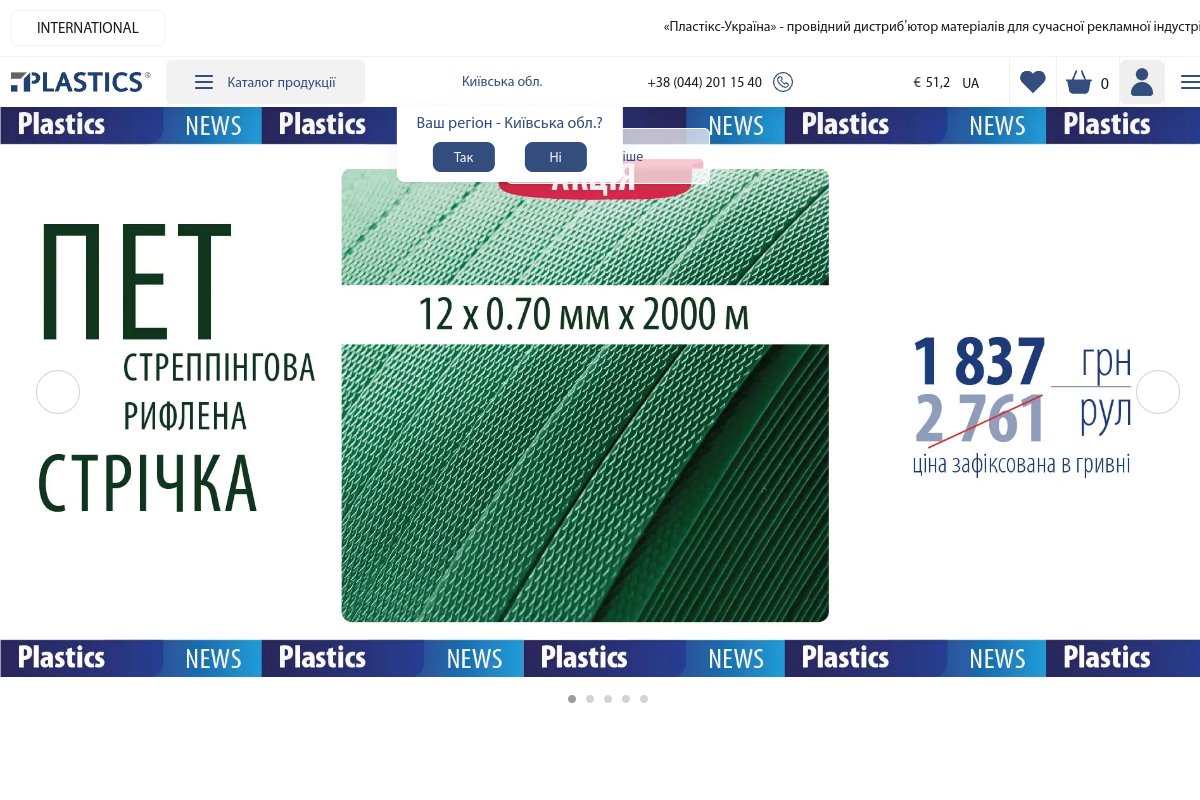
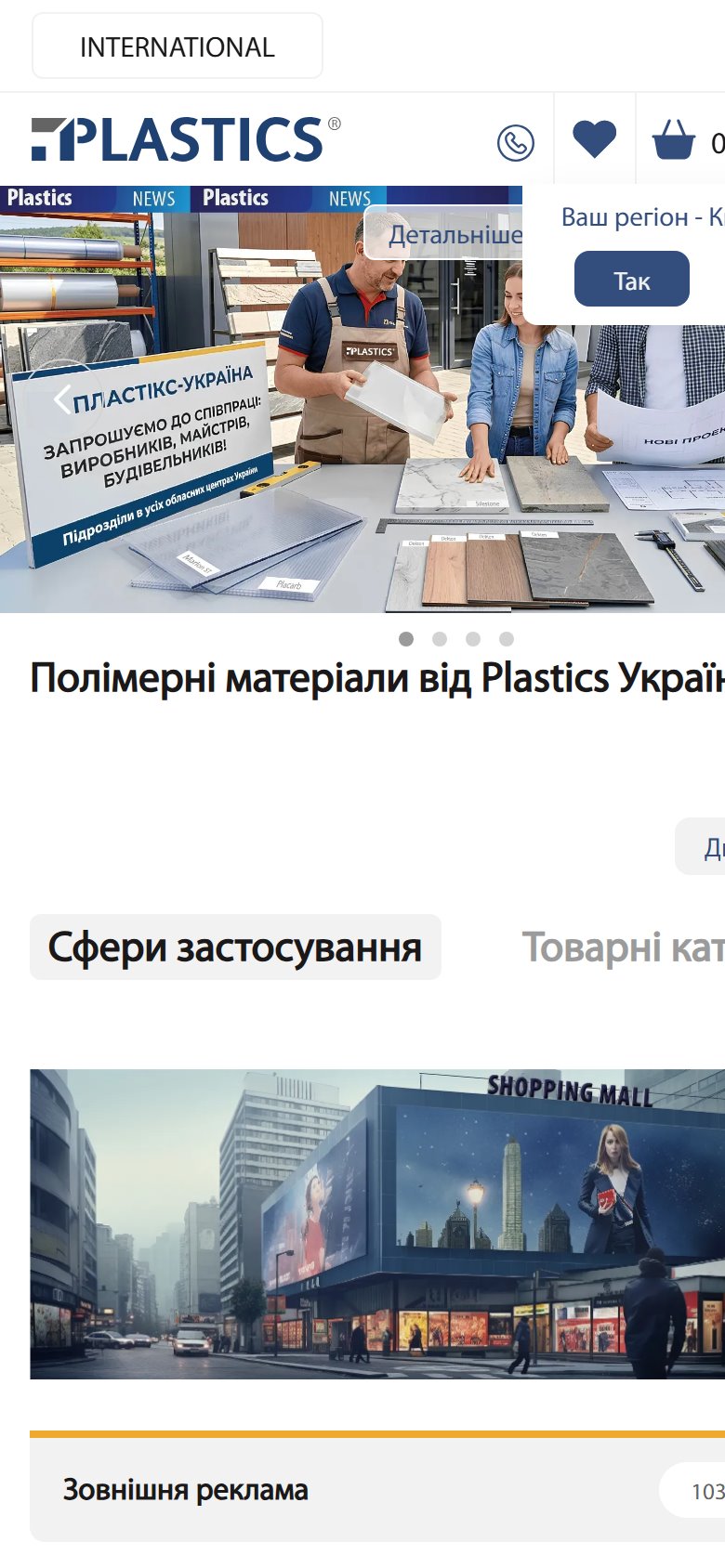
PLASTICS is a leading polymer materials distributor operating in Ukraine, Moldova and Georgia. ANIART built a multi-region B2B platform where every client sees their regional catalog, prices in their currency and live stock — while the head office manages everything from a single point.
Context: distribution across three countries
PLASTICS supplies polymer raw materials and products to businesses in three countries. B2B distribution across that geography is not "one site with a language switcher." It means different currencies, warehouses, price lists and partner terms in each region — which still have to feel like one coherent platform to the client.
Why B2B is harder than retail
In retail a buyer sees one price and one availability. In B2B every partner works on their own terms: personal price lists, regional stock, their own settlement currency. A pricing or stock error for a wholesale client isn't a minor misunderstanding — it's a failed delivery and damaged trust.
The challenge: three markets, one platform
The main difficulty is to show each client exactly their world (region, currency, assortment and their warehouse's stock) without turning content management into three separate projects. The head office had to remain a single point of control over catalog and assortment for all markets at once.
| Challenge | Solution on the platform |
|---|---|
| Different countries | Separate regional catalogs for Ukraine, Moldova and Georgia |
| Different prices | Regional price lists and multi-currency support |
| Different offices | A Google Maps view of offices and warehouses |
| Personal terms | Wholesale requests and individual price lists for regular partners |
| Single control | One content and assortment center for all markets |
Approach: regionality at the architecture level
We built multi-region support into the foundation of the platform, not bolted it on top: the region determines which catalog, which prices and in what currency a client sees. This let us scale the solution to new markets without rewriting logic — you add a region, not build another site.
- Designed a regional model: country determines catalog, price list and currency.
- Implemented multi-currency and regional price lists for wholesale clients.
- Added a map of offices and warehouses on Google Maps.
- Set up B2B flows: wholesale requests and personal partner terms.
- Connected GTM analytics to gauge demand by region.
What we built
Regional catalogs
Each market gets its own assortment, prices and currency, with no cross-region confusion.
Wholesale flows
B2B requests and personal terms for regular partners.
Presence map
Offices and warehouses on Google Maps — the client sees the nearest point.
Single management
One content center for three markets instead of three separate sites.
Architecture and technology
The platform runs on a PHP and MySQL stack with Google Maps integration for the presence map and GTM-based analytics. A regional data model sits at the core of the architecture: it determines catalog, price and currency visibility per client while leaving the head office a single admin panel.
Result
The distributor got a single digital storefront for three markets: each client sees their region and their terms, while the business manages everything from one center — no duplicated content, no manual sync. We continue to support and develop the platform.
Operating in several markets and want one B2B platform instead of a zoo of sites? Browse our other projects or get in touch.